How Long Does It Take to Hire Internationally?
One of the most common questions companies ask when expanding globally is:
“How long does it actually take to hire someone in another country?”
The answer depends entirely on how you choose to hire.
There are three main approaches:
- Setting up a local legal entity
- Hiring contractors
- Using an Employer of Record (EOR)
Each comes with very different timelines, levels of complexity, and compliance considerations.
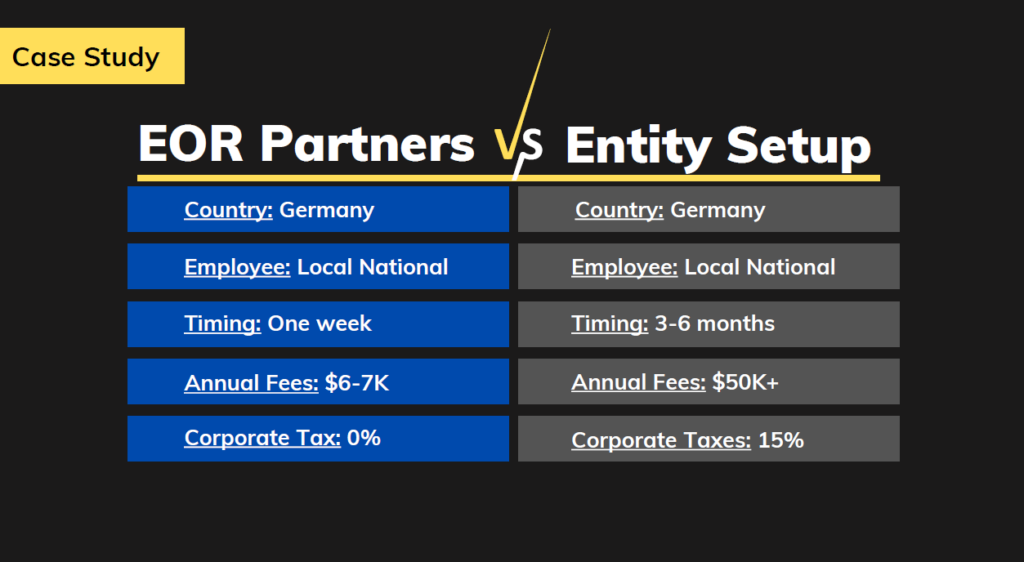
Hiring Through a Local Entity (3–6 Months)
The traditional approach to international hiring is setting up a legal entity in the target country.
This process typically includes:
- Company registration
- Tax registration
- Opening a local bank account
- Registering with social security authorities
- Setting up payroll systems
- Legal and accounting setup
Timeline Breakdown
- Entity registration: 4–12 weeks
- Bank account setup: 2–6 weeks
- Payroll & compliance setup: 2–4 weeks
In total, this process can take 3 to 6 months or longer depending on the country.
When This Makes Sense
This approach is usually best when:
- You are hiring a large team
- You are making a long-term market investment
- You need a permanent presence in the country
Hiring Contractors (1–2 Weeks)
Hiring contractors is often the fastest way to engage talent internationally.
In many cases, a contractor can begin working within days.
Why It’s Fast
- No employment contract requirements
- No payroll setup
- No statutory benefits obligations
However, speed comes with risk.
The Misclassification Risk
If a contractor relationship looks like employment, companies may face:
- Back taxes
- Fines and penalties
- Legal disputes
This is especially important in
countries with strict labour laws.
Hiring Through an Employer of Record (2–4 Weeks)
An
Employer of Record (EOR) provides a balance between speed and compliance.
Instead of setting up a legal entity, companies use an in-country partner to employ workers on their behalf.
Typical Timeline
- Contract drafting: 3–5 days
- Compliance checks: 3–7 days
- Payroll setup: 1–2 weeks
- Employee onboarding: 1 week
In most cases, employees can be onboarded within
2 to 4 weeks.
Why Companies Choose EOR
- Faster than entity setup
- Fully compliant employment
- No long-term infrastructure required
- Scalable across multiple countries
Key Factors That Affect Hiring Speed
Regardless of the method used, several factors can influence hiring timelines:
Country Regulations
Some countries have stricter employment laws and onboarding requirements.
Employee Type
Senior hires or specialised roles may take longer to onboard.
Documentation
Delays often occur due to incomplete documentation or approvals.
Which Option Is Best?
There is no single answer — it depends on your business goals.
- Entity setup: Best for long-term investment
- Contractors: Best for short-term flexibility
- EOR: Best for speed + compliance
Conclusion
Hiring internationally doesn’t need to take months.
While traditional expansion can be slow and complex, modern solutions like Employer of Record allow companies to hire globally in a matter of weeks.
For companies looking to move quickly and remain compliant, EOR has become the preferred option.