EOR vs Contractor: Global Hiring Explained
When companies begin hiring internationally, one of the first questions they ask is:
Should we hire someone as a contractor or as an employee through an Employer of Record (EOR)?
At first glance, hiring contractors can seem simpler. It may appear faster, involve fewer administrative steps, and avoid employment obligations.
However, in many cases, contractor arrangements can create
compliance risks if the working relationship resembles employment.
Understanding the difference between these two structures is critical when
building an international team.
What Is an International Contractor?
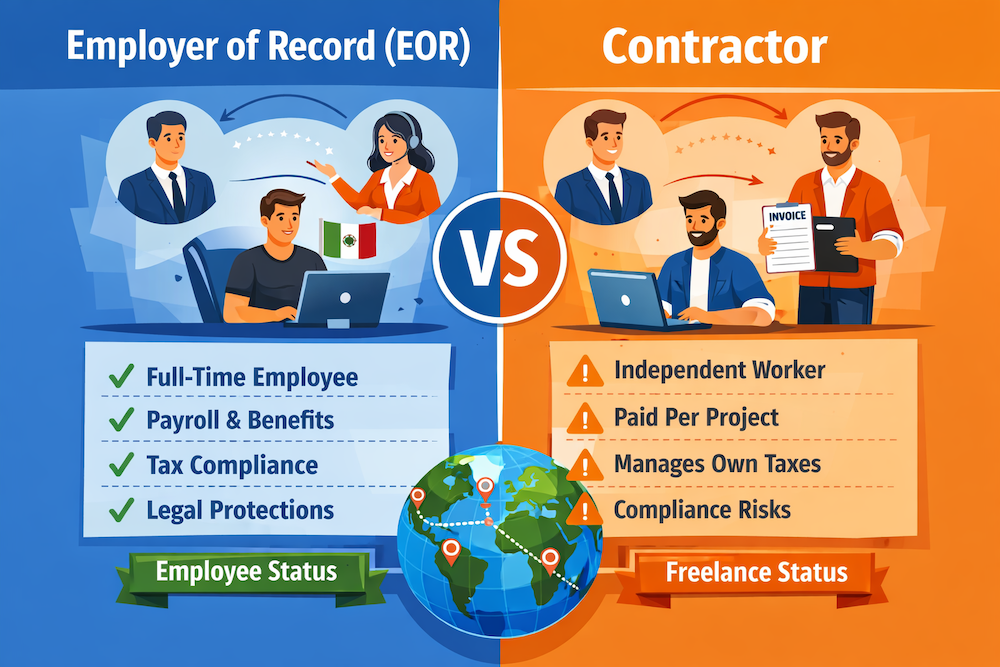
An international contractor is an independent professional who provides services to a company without being employed by that company.
Contractors typically:
- Work independently
- Manage their own taxes
- Use their own equipment
- Provide services to multiple clients
This structure can work well for short-term projects or specialised consulting work.
What Is an Employer of Record (EOR)?
An Employer of Record is a company that legally employs workers on behalf of another business in a specific country.
The EOR manages:
- Employment contracts
- Payroll administration
- Income tax withholding
- Social security contributions
- Local employment compliance
The client company manages the employee’s day-to-day responsibilities.
This structure allows businesses to hire employees in countries where they do not have a legal entity.
The Risk of Contractor Misclassification
One of the most significant risks when hiring contractors internationally is
worker misclassification.
Misclassification occurs when a worker is treated as a contractor but the nature of the relationship resembles employment.
Governments evaluate several factors to determine whether a worker should be classified as an employee.
Indicators of Employment
Common indicators include:
- Fixed working hours
- Direct management and supervision
- Long-term exclusive relationship
- Company-provided equipment
- Integration into the company team
If authorities determine that a contractor should have been classified as an employee, companies may face penalties, back taxes, and legal liability.
When Contractors Make Sense
Contractor arrangements are often appropriate when:
- Work is project-based
- The relationship is short-term
- The professional works with multiple clients
- The individual maintains significant independence
In these situations, contractor structures can offer flexibility.
When an EOR Is the Better Choice
An Employer of Record is usually the better option when:
- The worker is integrated into the company team
- The relationship is long-term
- The worker has fixed responsibilities
- The company manages the worker directly
In these cases, employment classification is often the safer and more compliant structure.
Conclusion
As companies expand internationally, choosing the correct hiring structure becomes increasingly important.
While contractors can provide flexibility for short-term projects, Employer of Record solutions allow businesses to hire employees compliantly in countries where they do not have a local entity.
Understanding the difference between these models
helps companies avoid compliance risks while building strong global teams.



